Sarah Chen moved her family to Canberra three years ago from London and immediately noticed something odd. Her two children—then aged 7 and 9—could walk to school alone. The streets around their home in Forrest were quiet enough that letting them roam felt normal, not reckless. "In London, that would've been unthinkable," she says. "Here, the whole city design assumes kids will move freely."
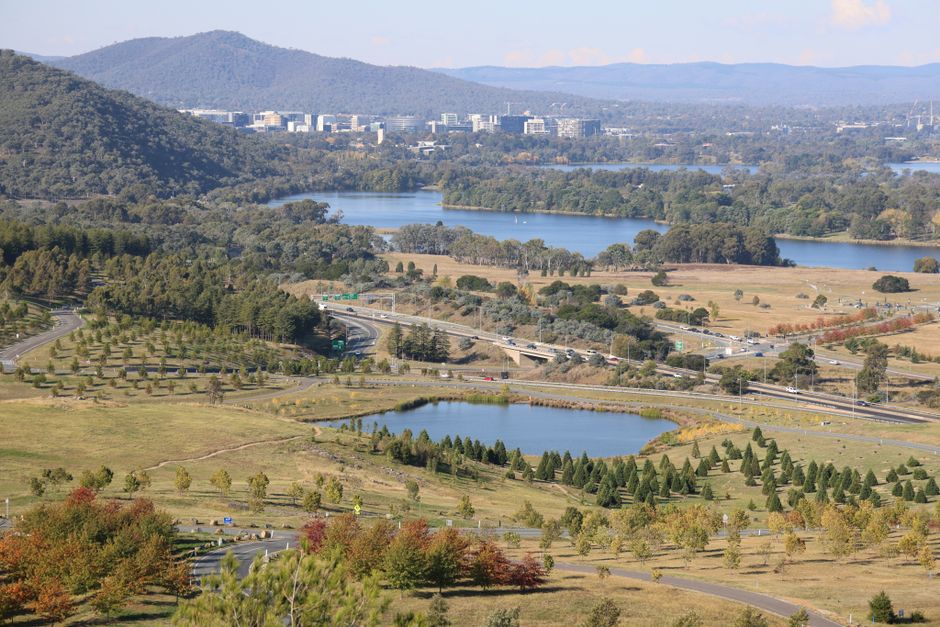
What Chen observed is neither accident nor marketing slogan. Canberra's approach to family life and schooling stems from its unique origin story—a city built from nothing in 1927 according to a master plan, rather than sprawling organically over centuries like Sydney, Melbourne, or most major cities worldwide. That planned foundation created something unexpected: a modern city where raising children operates on fundamentally different assumptions about space, safety, school organisation, and community structure than anywhere else in Australia or comparable cities globally.
The physical infrastructure reveals the difference immediately. Canberra's separated cycleways and pedestrian paths—distinct from roads in ways that central London or inner-city Toronto never managed—were baked into the original design. Families living in suburbs like Dickson, Yarralumla, or Weston Creek find that primary schools sit within walkable distances. Campbell Primary School, established in 1927 alongside the city itself, sits in a neighbourhood where parents can reasonably expect their 10-year-olds to navigate independently. Compare that to the parenting model in most Northern Hemisphere cities, where school runs dominate the morning schedule and after-school programs are mandatory childcare solutions rather than enrichment activities.
The school system itself reflects the city's planned origins. The ACT Education Directorate operates on a structure designed in the 1970s when planners could essentially build schools to match population growth projections. There's no competition for desirable catchments because the system was constructed with the assumption that every neighbourhood would have adequate schools. A family in Gungahlin gets the same resource allocation as one in inner Canberra. Unlike London boroughs or Sydney's northern beaches, where school quality varies wildly based on postcode and drives property prices accordingly, Canberra parents don't face the same property-market squeeze when choosing where to raise children.
Space changes everything
The numbers tell a revealing story. Canberra covers 2,400 square kilometres for a population of 470,000. That's roughly equivalent to London's area but with barely one-tenth the density. Melbourne sits at roughly 1,200 square kilometres for 5.2 million people. Toronto sprawls across 630 square kilometres with 2.9 million residents. Canberra families get yards. They get quiet streets. They get parks designed into every suburb rather than concentrated in central areas. The average household property in Canberra runs to around 600 square metres, compared to London's typical 200-square-metre townhouse.
That space translates directly into how parents approach childhood. Unstructured outdoor play—the kind parents in dense cities delegate to paid activities—happens naturally in Canberra. The Molonglo River Corridor stretches 50 kilometres of pathways. Gungahlin has been built in the last two decades with family amenities front-loaded: the Gungahlin Town Centre connects directly to school precincts and recreation facilities. It's not helicopter parenting because the physical environment doesn't demand it.
The city's cultural assumption about community matters too. Because Canberra was built for public servants and their families—people who often moved every few years—schools and suburbs developed social structures designed for integration. Parent volunteer cultures are embedded differently. The ACT has near-universal participation in school boards and community committees because the city was architecturally built around the assumption that parents would be civically engaged.
For families considering where to raise children in 2026, Canberra presents an alternative model. Property prices reflect the reality: a family home in inner suburbs like Forrest or Campbell averages around $900,000, compared to $2.2 million for equivalently sized homes in inner Melbourne or $3.8 million in central London. You're paying for fewer constraints, not more exclusivity. The school system won't fail you because the system was designed without historical inequities baked in. Your 10-year-old can walk to school. Your teenager can ride a bike to the city centre. These aren't selling points in Canberra—they're defaults, baked into the architecture of a city that was planned rather than inherited.