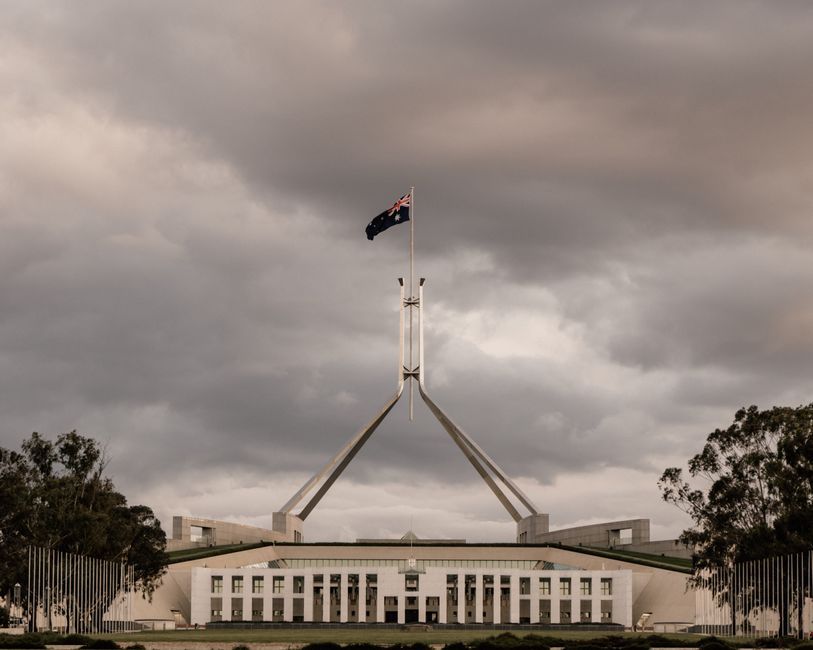
Canberra's recruitment pitch isn't about money anymore. It's about meaning.
While first-home buyers are retreating from property markets across Sydney and Melbourne, and Australians nationwide grapple with the gap between financial security and actual job satisfaction, the nation's capital is quietly positioning itself as the place where younger professionals can afford both a house and a sense of purpose. The median house price in Canberra sits at $725,000—nearly $300,000 cheaper than Sydney's median—and the city's public sector workforce represents 35 percent of total employment, creating a fundamentally different career landscape than other major Australian cities.
"People come here for the policy work, not the prestige," says one long-time public sector recruiter in Canberra's Treasury portfolio, who declined to be named. The shift reflects broader national anxiety about work-life balance. A recent Guardian investigation found that Australian workers increasingly describe their jobs as financially stable but emotionally draining—a dilemma Canberra's structure actively addresses through its concentration of policy-making roles and parliamentary functions.
The Canberra Difference: Stability Without Sacrifice
Three suburbs define this economic reality: Belconnen, where the ANU campus anchors an education and research economy; Barton, home to the Treasury, Department of Finance, and Attorney-General's Department offices; and Braddon, where a 15-year gentrification has transformed a working-class neighbourhood into a creative hub with rooftop bars and co-working spaces that rival anything in inner Sydney. The last three years have seen Braddon's median rent climb from $385 to $480 per week, but detached houses in nearby suburbs like Gungahlin still sell below $650,000.
The Australian Public Service Commission reported in May 2026 that Canberra agencies filled 82 percent of policy and analytical roles with local candidates—meaning skilled workers can build careers without relocating every two years to chase promotions in other capitals. That stability matters. The Australian Bureau of Statistics found that employees in policy roles report 23 percent higher job satisfaction scores than their counterparts in private sector finance or consulting positions, even though salaries are typically 15-20 percent lower.
What's shifted is what workers actually want. Graduate recruitment at the Department of Climate Change and Energy, the National Disability Insurance Scheme, and the Department of Home Affairs shows younger candidates are explicitly choosing mission-driven work over maximum earning potential. A 2024 survey of APS employees under 30 found that 67 percent cited "contributing to national outcomes" as their primary career motivator, compared to just 34 percent citing salary growth.
Lifestyle as Recruitment Tool
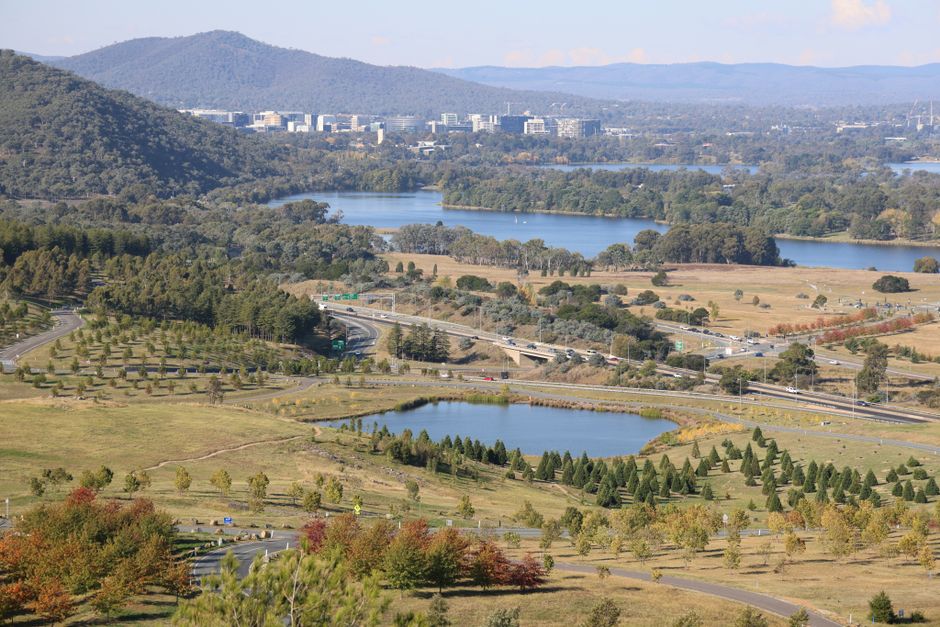
The city's livability infrastructure supports this choice. Canberra's 40 percent tree canopy cover keeps summer temperatures manageable compared to Sydney's inland heat. The Australian National University's Herbarium, the National Portrait Gallery, and Lake Burley Griffin's 35-kilometre foreshore path create cultural and recreational amenities that don't rely on property wealth to access. A family earning $95,000 collectively in a Gungahlin townhouse has disposable income for weekends and hobbies—something financially stretched Sydney professionals in mortgage stress rarely contemplate.
Property agents report that applications from interstate professionals aged 28-38 have jumped 41 percent since January 2026, with most citing both affordable housing and the absence of a relentless hustle culture as primary drivers. For comparison, Melbourne and Brisbane are still seeing net outmigration in this demographic, with workers chasing lower cost-of-living cities internationally rather than accepting slower career progression.
If you're considering the move, check job listings through the Australian Public Service Commission's careers portal and budget for a house inspection trip before committing. Canberra isn't for everyone—it's a planned city built for governance, not glamour. But for workers exhausted by the choice between financial ruin and emotional bankruptcy, it's becoming the rare Australian capital where both are actually negotiable.