lifestyle
Why Canberra's commute puts world cities to shame
While Sydney gridlocks and Melbourne chokes on congestion, Canberra's transport network offers what global planners call a blueprint for liveable cities.
3 min read
Updated 12 h ago
lifestyle
While Sydney gridlocks and Melbourne chokes on congestion, Canberra's transport network offers what global planners call a blueprint for liveable cities.
3 min read
Updated 12 h ago
Canberra commuters spend less than 35 minutes getting to work. That's not a boast—it's a structural advantage baked into the city's DNA since Walter Burley Griffin drew it up a century ago.
The figure matters now because Australian cities are strangling. Sydney's morning rush crawls across the M1 corridor at 15 kilometres per hour. Melbourne's ring roads clog by 8:15am. Brisbane's Riverside Expressway has become a car park. Meanwhile, planners from Copenhagen to Calgary are studying how Canberra—population 460,000 and growing—manages the trick of moving people without the gridlock that defines every other major Australian city.
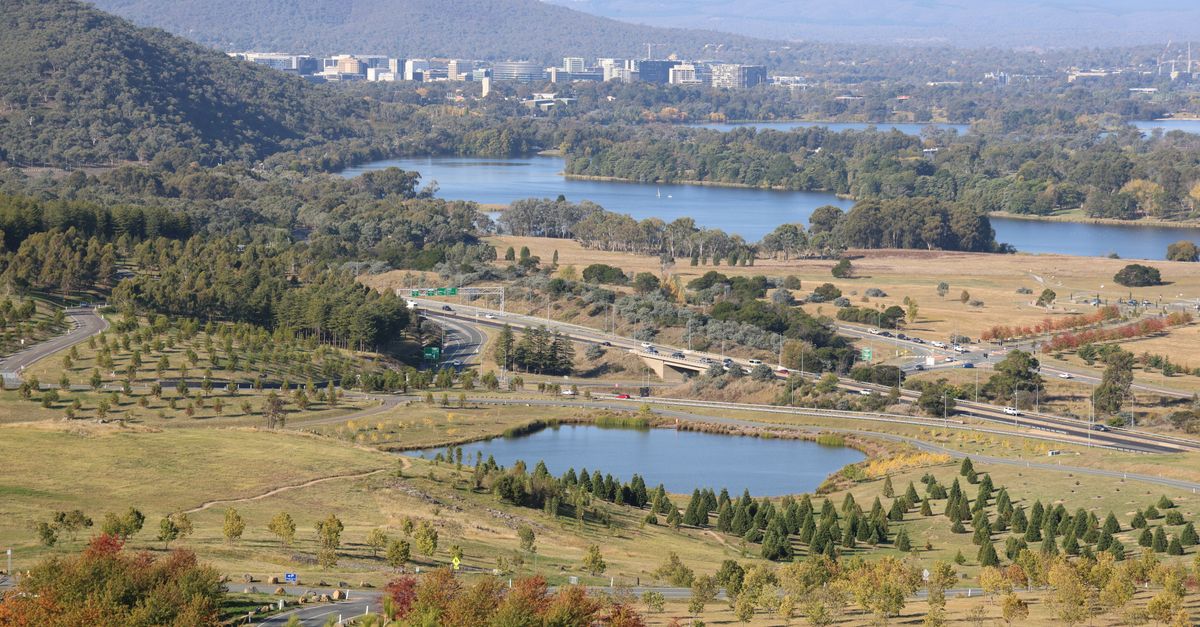
Walk into the Transport Canberra offices near Northbourne Avenue and you'll see why. The network operates on a principle most cities abandoned decades ago: separating car traffic from everything else. The three artificial lakes—Burley Griffin, Gungahlin, and Tuggeranong—sit at the heart of a geometric system where suburbs radiate outward in discrete clusters. Belconnen to the northwest. Woden to the south. Gungahlin to the north. Each precinct has its own shops, services, and employment nodes. You don't have to drive to the city centre for work.
Transport Canberra runs 92 bus routes across these corridors. The Rapid network—introduced in 2019 and upgraded in 2024—prioritises high-frequency services on trunk routes like the Civic-Belconnen-Gungahlin corridor. A bus every 10 minutes at peak times. Compare that to Sydney's T1 line, which runs every 6 minutes but services a population spread across 12,000 square kilometres.
What distinguishes Canberra isn't fancy technology. It's planning discipline. The city was designed for 250,000 people. It now has 460,000. Most would have choked. Canberra hasn't, because the original distributed design—those eight suburbs instead of one sprawling metropolis—scales better than monocentric cities.
A commuter from Gungahlin heading to the Australian National University in Acton doesn't merge into a downtown corridor. They take the 80 or 81 bus south. A Woden resident working in Belconnen takes the dedicated bus lanes on the Canberra Avenue corridor. The ActewAGL Stadium precinct in Braddon serves as a secondary employment hub. The National Film and Sound Archive sits in Acton. The National Museum in Parkes. Work is distributed. Traffic doesn't follow the same congestion funnel that strangles Sydney or Melbourne.
The data backs it up. Average commute time in Canberra stands at 34 minutes according to the 2021 Census. Sydney's was 42 minutes. Melbourne's was 45 minutes. Brisbane's was 44 minutes. For a city with 460,000 people, Canberra's figure sits closer to what urban planners find in cities of 300,000—places like Nuremberg or Seville. One planner from the Netherlands-based transport consultancy firm told The Daily Canberra in 2024 that Canberra's radial design anticipated problems that Amsterdam, Rotterdam, and Copenhagen are now spending billions to address retroactively.
Canberra's advantage isn't permanent. Light rail from Gungahlin to the city—set to open in 2026—represents the first serious bet that the old car-dependent system needs competing alternatives. That's sensible. But it also signals a reckoning: the distributed city model works until it doesn't.
For now, if you live in Canberra, your commute probably feels like a luxury. Most Australian cities would trade that 35-minute average for the gridlock they're living with. That won't last forever. But while it does, it offers a glimpse of what cities look like when planning decisions made 70 years ago actually prevent the problems that plague everyone else.


About this article
Published by The Daily Canberra
Spread the word
Daily brief
Free, in your inbox before 7am. Weekdays.
The Daily Network — local news across Australia