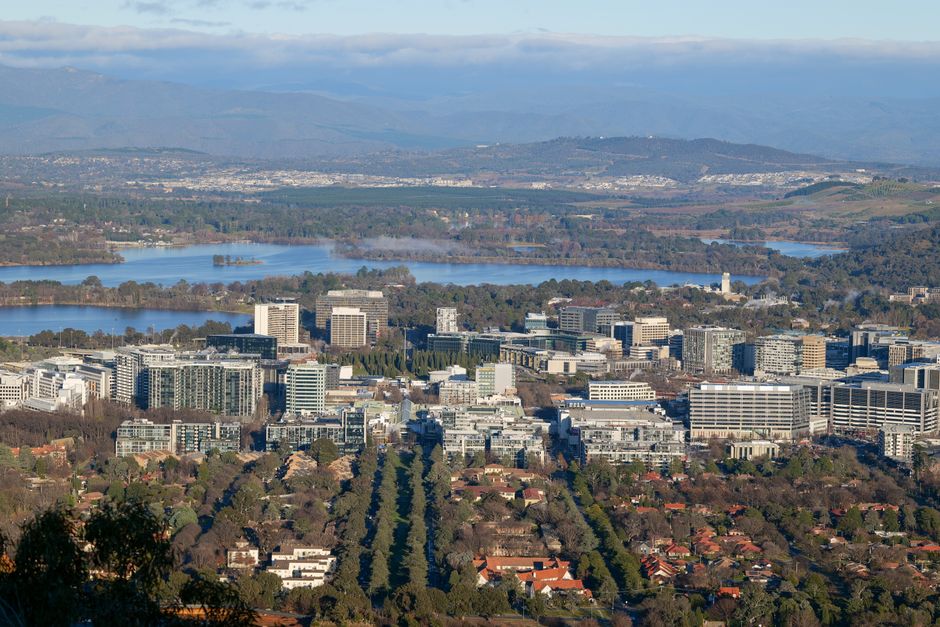
Reid and Braddon, the two inner-north suburbs closest to Lake Burley Griffin's northern foreshore, have posted median house price growth of roughly 11 percent over the 12 months to June 2026 — comfortably ahead of the ACT-wide figure of around 6.5 percent recorded by CoreLogic for the same period. With Canberra's overall median house price sitting at approximately $835,000, the waterfront fringe is now trading at a significant premium, with detached homes in Reid regularly clearing $1.35 million at auction.
The timing matters for a straightforward reason: interest rates have stabilised after the Reserve Bank's back-to-back cuts in February and May 2026, restoring borrowing confidence among the public servant cohort that dominates Canberra's buyer pool. Fixed-rate products under 5.4 percent are back on the table at Commonwealth Bank and ANZ, and pre-approval enquiries at mortgage brokers along Northbourne Avenue lifted sharply through May. When confidence returns to the market in the ACT, it tends to return first in suburbs with a lifestyle hook — and nothing sells a lifestyle like lakefront proximity.
What Is Driving the Waterfront Premium
Reid sits roughly 1.5 kilometres from the Parliamentary Triangle and backs onto Grevillea Park, a strip of National Capital Authority-managed foreshore that gives residents effectively unobstructed access to the lake's edge without paying waterfront land tax. That distinction — amenity without direct frontage cost — is the core of the suburb's investment appeal. Braddon, directly to the north on Mort Street and Elouera Street, offers a denser apartment and terrace market where yields of 4.8 to 5.1 percent gross are achievable, according to figures published by the ACT Revenue Office's quarterly property update.
The National Capital Authority completed Stage 2 of its West Basin foreshore upgrade in March 2026, adding a 1.2-kilometre shared path between Commonwealth Park and the Rond Terraces precinct. Foot traffic through the area has measurably increased, and two hospitality operators — one of them the group behind the Westside Acton Ferry Wharf café — have already lodged development applications to expand lakeside offerings. More people using a precinct means more renters wanting to live near it, and vacancy rates in Reid currently sit at 0.7 percent, among the tightest in the territory.
Buyers competing for the limited stock in Reid are also pushing into the adjacent suburb of Campbell, where the proximity to the Anzac Parade boulevard and the Australian War Memorial gives a separate price floor. Campbell's median is approximately $1.18 million, about $170,000 below Reid's current median, suggesting a catch-up trade that investor-focused buyers' agents at Canberra firm Suburbanite have been flagging to clients since the start of the year.
What Buyers Should Know Before Moving
The ACT's land tax structure deserves scrutiny before any purchase in this bracket. Investment properties in Reid and Braddon attract land tax calculated on unimproved value, and those values were reassessed upward by the ACT Valuation Services unit in January 2026 — adding between $800 and $1,400 annually to holding costs for a typical three-bedroom house in the precinct compared with 2024-25 bills. That cost needs to be modelled against projected rental income before the gross yield figures look as attractive as they first appear.
Stamp duty remains a fixed pain point. On a $1.35 million purchase in the ACT, the conveyance duty bill lands at approximately $54,000 under the territory's 2025-26 rates schedule — a number that, unlike Queensland's headline-grabbing increases elsewhere in the country, has been relatively stable here but still represents four months of mortgage repayments at current rates.
The practical advice is straightforward: the window between current prices and the suburb reaching its fully-priced state is narrowing. Auction clearance rates across the ACT were running at 65 percent through June, but in the inner-north corridor clearance rates have been tracking closer to 74 percent for the past three consecutive months. Stock is thin, competition is real, and the infrastructure investment flowing into the foreshore precinct is not speculative — it is already in the ground.