Wellness
Walking meditation: how to turn your daily walk into mindfulness
Canberrans already have some of the best walking trails in the country — here's how to use them to genuinely calm a racing mind.
4 min read
Wellness
Canberrans already have some of the best walking trails in the country — here's how to use them to genuinely calm a racing mind.
4 min read
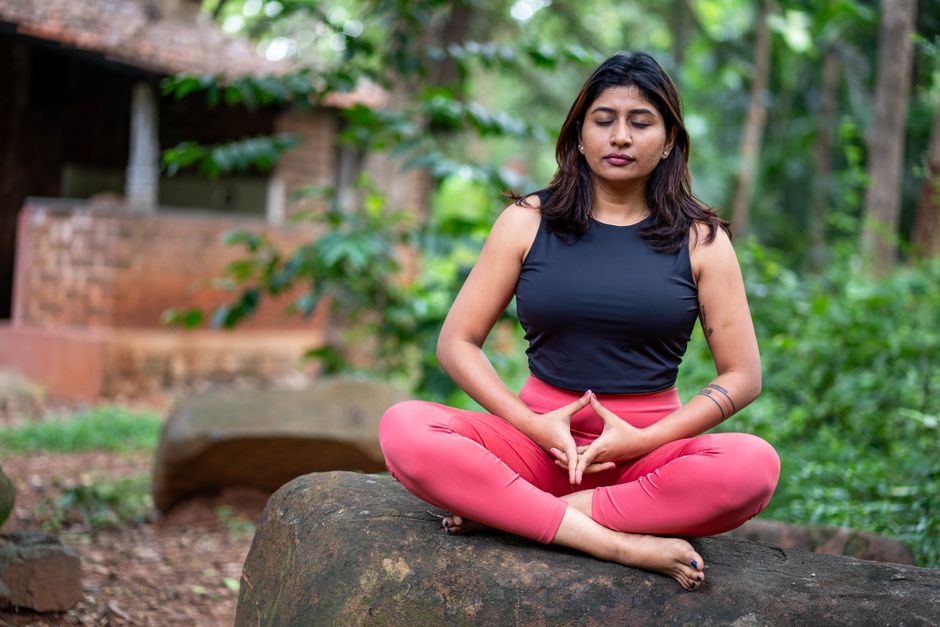
You don't need a cushion, a studio, or a subscription app. The most accessible form of meditation in Canberra costs nothing and starts the moment you step onto the path around Lake Burley Griffin.
Walking meditation — the practice of anchoring attention to the physical act of walking rather than letting the mind spiral — has been gaining ground among psychologists and wellness practitioners as a low-barrier entry point into mindfulness. With Australians recording some of the highest rates of anxiety and psychological distress since the Australian Bureau of Statistics began tracking them through its National Study of Mental and Physical Wellbeing, the timing is pointed. The ABS data, last updated in late 2025, found roughly one in five Australians aged 16 to 85 met criteria for a mental disorder in the previous 12 months. In the ACT, where the public service culture can breed a particular brand of high-functioning stress, those numbers land with weight.
Beyond Blue's ACT-based services have seen consistent demand for non-clinical mental health tools — the kind that people can use between GP appointments or psychology sessions. Walking meditation fits that gap almost precisely.
The 28-kilometre loop around Lake Burley Griffin is the obvious starting point. The stretch between Lennox Crossing and the Central Basin, near the National Gallery of Australia on Parkes Place, offers long flat sections with minimal road noise — ideal for the slow, deliberate pace that walking meditation requires. Early morning, before the cycling commuters pick up speed, is particularly good.
Tuggeranong is worth naming specifically. The parkrun Tuggeranong event, held every Saturday at 8am in Greenway, draws several hundred participants weekly. Parkrun coordinators there have informally noted that plenty of regulars walk the 5-kilometre course rather than run it — and doing so with deliberate attention to breath and footfall is a legitimate practice, not a consolation prize.
For something more sheltered, the Australian National University's campus in Acton has tree-lined paths between Chifley Library and the ANU Kambri precinct that work well for a 20-minute lunchtime session. The University of Canberra's main loop in Bruce, connecting the Health Hub building to the artificial wetlands on the southern edge of campus, is quieter and less trafficked.
The technique itself is simpler than most people expect. Walk at roughly half your normal pace. Direct attention to the physical sensation of each foot lifting, moving forward, and making contact with the ground. When the mind wanders — and it will, immediately — return attention to the feet without judgment. That cycle of noticing and returning is the practice. There is no failure state.
A 2023 meta-analysis published in the journal Mindfulness examined 27 randomised controlled trials and found walking-based mindfulness interventions produced statistically significant reductions in self-reported anxiety and rumination compared to unstructured walking. Effect sizes were comparable to seated meditation for stress outcomes, and superior for mood in participants who described themselves as reluctant to sit still — which, frankly, describes a significant proportion of Canberra's population.
ACT Health's Healthy Canberra program, which runs free community activity sessions across the territory, currently lists gentle walking groups in Belconnen and Woden. Those groups aren't explicitly framed as meditation, but the structure — set time, set route, low-pressure environment — provides an external scaffold that makes it easier to practice attention-based techniques.
Starting small is not a cliché, it's the actual method. Ten minutes, three times a week, is enough to build the neural habit of redirecting attention. The Acton foreshore path from the CSIRO Discovery Centre car park to Reconciliation Place covers roughly 1.5 kilometres at a meditative pace — about 20 minutes. That is a complete session.
If you want structured guidance before heading out alone, the free Smiling Mind app — developed by an Australian non-profit — has a dedicated walking meditation module that runs between eight and fifteen minutes. It requires no account creation and works offline.
Anyone experiencing significant anxiety, depression or psychological distress should speak with their GP or contact Beyond Blue on 1300 22 4636 before relying on self-directed wellness practices as primary support.
Wellness

Wellness

Wellness

Wellness
About this article
Published by The Daily Canberra
Spread the word
Daily brief
Free, in your inbox before 7am. Weekdays.
The Daily Network — local news across Australia