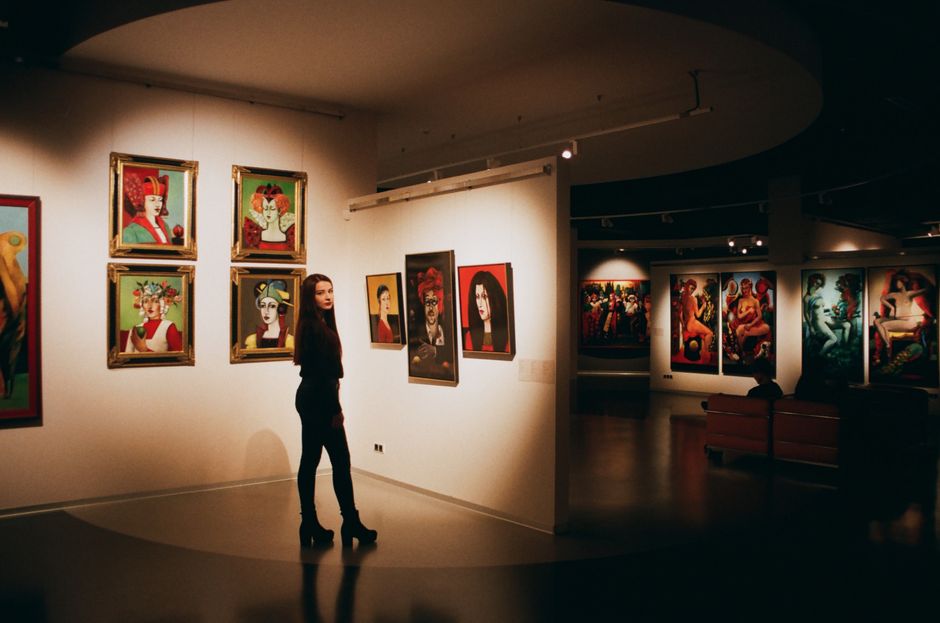
Moscow's State Tretyakov Gallery announced a 23 percent jump in summer visitor numbers compared to 2025, with curators attributing the surge partly to changing international travel patterns and renewed interest in classical Russian art collections. The main gallery on Krymsky Val, which houses the world's largest collection of Russian avant-garde paintings, has extended evening hours through August to accommodate the influx.
The timing reflects a broader moment for Moscow's cultural infrastructure. With Western European capitals facing climate-related event cancellations and tourism volatility, the Russian capital has positioned itself as a stable destination for serious art tourists. The Pushkin State Museum of Fine Arts on Volkhonka Street reported 45,000 visitors in June alone, driving discussions among museum directors about capacity and preservation standards for centuries-old structures.
The Essential Routes: Where Heritage Lives
Start on Red Square and the surrounding Kremlin district, where the Cathedral of the Dormition—completed in 1479—still dominates the skyline. The Kremlin Museums consortium operates five distinct exhibition spaces inside the fortress walls, charging 1,000 rubles (roughly $10 USD) for a combined ticket that grants access to the Armoury Chamber, the three cathedral complexes, and the Bell Tower of Ivan the Great. Plan three to four hours minimum.
From there, move southwest to the Pushkin Museum's main building. The permanent collection spans Egyptian antiquities through 20th-century European modernism, with a particularly strong section on Impressionist works housed in the second-floor galleries. Entry costs 700 rubles; photography is not permitted in most galleries, which staff say helps preserve paint stability in Moscow's humid summer months.
The Tretyakov Gallery's collection splits between two locations. The main gallery at Krymsky Val focuses on pre-Soviet and early-Soviet work—Kandinsky, Malevich, Goncharova—while the New Tretyakov on the opposite side of the Moscow River specializes in Soviet-era and contemporary Russian art from 1917 onward. Each requires separate admission (600 rubles per venue).
Don't skip the Museum of Moscow itself, housed in a restored 18th-century mansion at Zubovsky Boulevard. The institution opened its current iteration in 2014 and maintains rotating exhibitions on the city's urban history, commercial life, and neighborhood transformation. Admission is 350 rubles.
Community Life and Seasonal Traditions
Moscow's traditional holiday calendar centers on several public festivals that shape summer activity. The city observes the Day of Moscow on September 1, but July sees smaller neighborhood celebrations and open-air exhibitions in parks across all twelve administrative districts. The Gorky Park cultural complex on Kropotkinski Lane hosts regular free concerts and temporary art installations, while the nearby Pushkin House on Kropotkinski Lane hosts rotating literary and design exhibits tied to Russian cultural figures.
Local residents maintain deep engagement with museum programming. The Tretyakov Gallery's membership program, which costs 3,500 rubles annually, has 8,400 active members who participate in curator talks, conservation workshops, and private viewing sessions. The institution's education department runs year-round programs for school groups, though summer enrollment drops as families travel.
Practical note for visitors: many major museums close one day weekly—typically Mondays or Tuesdays—so confirm hours before arriving. The Kremlin Museums close Thursdays. Tickets sell faster in morning hours, particularly on weekends. Allow extra time if visiting in early July, when school holidays create domestic tourism surges.
Summer heat affects the experience considerably. Air conditioning is standard in major galleries, but queuing outdoors at the Kremlin entrance can test patience. Arrive by 10 a.m. or after 5 p.m. to avoid midday crowds and temperature extremes currently affecting much of the Northern Hemisphere.