Moscow's cultural calendar hit a breaking point this week. Outdoor film screenings in Gorky Park cancelled. The Moscow International Film Festival's open-air pavilion at Luzhniki Stadium postponed indefinitely. Even the traditional July Jazz Festival at Sokolniki Park moved indoors to the Radisson Blu's climate-controlled ballroom on Kostyanitskiy Lane.
The shift marks an unusual turn for a city that prizes its summer outdoor events. Muscovites have spent the past three weeks migrating to air-conditioned galleries and theatres instead, creating packed matinees at venues that normally see their slowest season. The State Tretyakov Gallery on Krymsky Val reported a 47 percent jump in daily visitors during the first week of July compared to the same period last year, with ticket sales reaching 3,800 people on Wednesday alone.
"We weren't built for this weather," said Dmitry Volkov, the director of cultural programming at the Moscow City Duma's Department of Culture. The temperature spike—the highest July readings since records began in 1886—forced programming directors across the city to make rapid decisions about venue swaps and scheduling. The Pushkin State Museum of Fine Arts on Volkhonka Street reopened its permanent collection galleries for extended evening hours, staying open until 11 p.m. instead of the usual 8 p.m. closing.
Galleries Become De Facto Community Centers
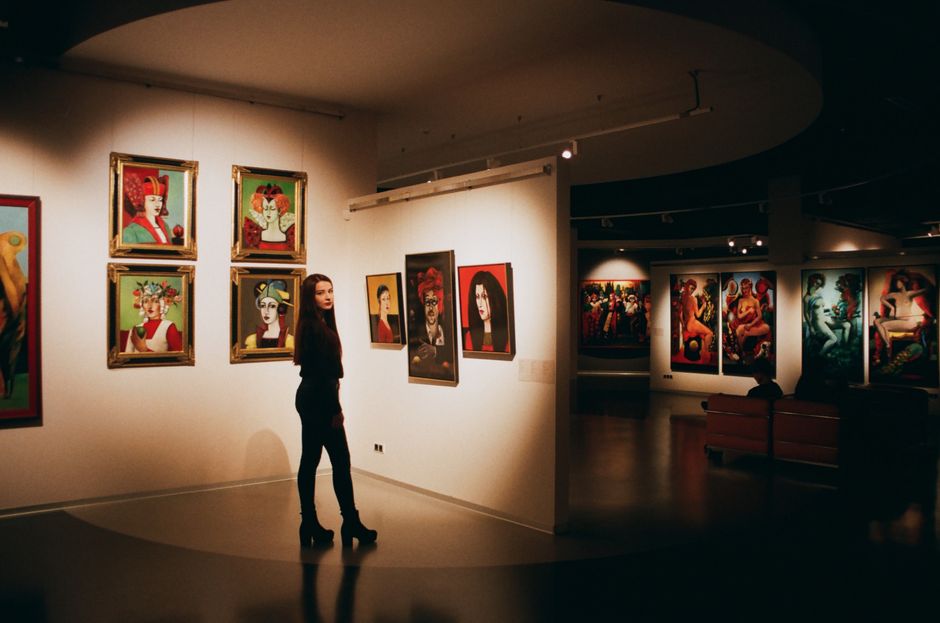
The Garage Museum of Contemporary Art in Zaryadye Park has become an unlikely refuge. Its sprawling underground galleries, naturally cooler than street level, drew lines around the block by Wednesday. The museum's current exhibition—a retrospective of Soviet-era avant-garde photography spanning 200 prints—has become the unexpected talk of Moscow's cultural circles. Tickets sold out for the Friday and Saturday evening sessions by Thursday afternoon.
The phenomenon extends to smaller spaces. Kunsthalle, the experimental gallery on Bolshaya Tatarskaya Street in the Red October neighbourhood, moved its scheduled performance piece "Silence Studies" from an outdoor courtyard to its main indoor hall. The work, which involves four performers moving slowly through water installations, sold twice as many tickets in its new indoor configuration than anticipated.
Theatre houses have experienced a similar surge. The Moscow Art Theatre (MXAT) on Kamergersky Lane reported extending two concurrent productions—a Chekhov revival and a contemporary piece by local playwright Lyudmila Petrushevskaya—for additional performances through July 15. MXAT's business office released limited-capacity evening slots at 550 rubles per ticket, undercutting the usual 890-ruble cost for prime seating.
The Numbers Tell a Pattern
The data backs up what cultural directors are observing. The Association of Moscow Museums reported that indoor venue attendance jumped 41 percent between June 25 and July 3. Outdoor summer festivals saw cancellations total 12 scheduled events, affecting roughly 6,500 ticketed attendees. The Kino International film festival, which traditionally runs outdoor screenings at VDNKh through July, announced a partnership with Okko Cinema's multiplex locations across the city to host evening showings instead.
Price structures have shifted accordingly. Smaller galleries and museum spaces introduced a "heat hour" discount—20 percent off admission between noon and 2 p.m.—to encourage spread-out crowds. The Multimedia Art Museum at Ostozhenka requested advance online booking to manage surge capacity.
For Moscow residents and visitors, the implications are practical. If you're planning cultural outings in Moscow this month, book ahead for evening performances and gallery visits. The indoor venues that felt optional in June have become essential escapes. The outdoor festivals and open-air screenings that define Moscow's summer rhythm won't resume until early August, when meteorologists predict cooler conditions. Until then, the city's culture is happening inside—and that's where the crowds will find it.