Business
Moscow Startup Funding Crisis 2026: Capital Dries Up
Venture investment in Moscow tech startups collapsed 40% as founders face capital shortage, rising costs, and mass talent exodus from the Russian capital.
4 min read
Updated 2 h ago
Business
Venture investment in Moscow tech startups collapsed 40% as founders face capital shortage, rising costs, and mass talent exodus from the Russian capital.
4 min read
Updated 2 h ago
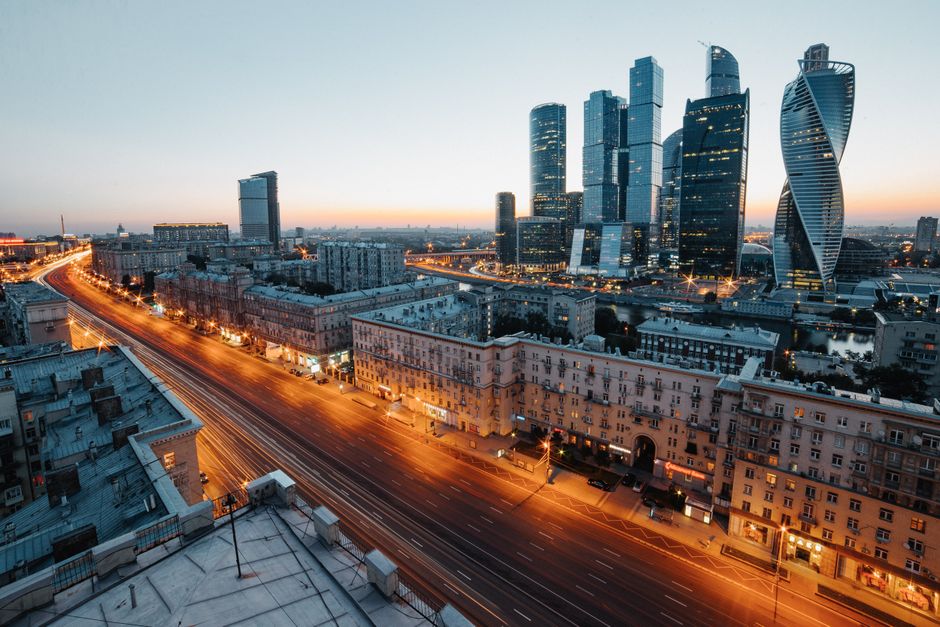
The numbers tell the story bluntly. Venture investment in Russian technology companies fell to an estimated $180 million in the first half of 2026, according to data compiled by the Russian Venture Company's successor body, down roughly 40 percent from the same period two years ago. For founders working out of co-working spaces in Skolkovo or pitching from glass offices along Leningradsky Prospekt, that collapse is not an abstraction — it is an empty cap table and a payroll problem arriving on the same Tuesday morning.
The timing matters because 2026 was supposed to be a recovery year. After the shocks of 2022 and the grinding adjustment that followed, a cohort of founders who stayed in Moscow — or quietly returned from Yerevan, Tbilisi, and Belgrade — had bet that domestic institutional capital would fill the gap left by departed Western funds. That bet is not paying off. The Central Bank of Russia has held its key rate at 16 percent since late 2025, making debt financing ruinously expensive for early-stage companies that have no recurring revenue to service a loan. Equity rounds are taking six months or longer to close, when they close at all.
Walk through the Flacon Design Factory on Bolshaya Novodmitrovskaya Street on any weekday afternoon and the creative energy is visible — ceramicists, app developers, small-batch food brands crowded into the same industrial complex. But several tenants there said privately in June that they had deferred hiring plans for the second half of the year, waiting to see whether a promised regional grant programme from the Moscow City Entrepreneurship Support Fund would actually disburse on schedule. The fund, which committed 2.4 billion roubles in 2025 for small business support, has been slower to process applications in 2026, with some founders reporting waits of 14 weeks or more for decisions on grants under 500,000 roubles.
The talent problem compounds the capital problem. Russia's IT sector lost an estimated 100,000 specialists to emigration in 2022 alone, and the outflow, while smaller, has not stopped. Startups in the fintech cluster around Novoslobodskaya Metro, where several post-banking-licence companies set up shop after 2023, are competing for a shallower pool of senior engineers. Average salaries for a mid-level backend developer in Moscow have climbed past 350,000 roubles a month in some sub-sectors — a figure that strains the budgets of seed-stage companies trying to build product before they have revenue.
Skolkovo, the innovation hub on the western edge of the city, remains the most visible institutional anchor for the ecosystem. Its resident companies number around 4,000 on paper, but the hub's own reports acknowledge that a significant share are dormant or operating at minimal scale. The residents that are genuinely active tend to cluster in defence-adjacent deep tech, industrial software, and artificial intelligence tools for domestic enterprise clients — sectors where government procurement provides a floor. Consumer-facing startups, e-commerce plays, and anything requiring international payment infrastructure are in a far harder position.
Survival strategies vary. Some founders are restructuring as limited liability companies under simplified taxation regimes to reduce overhead. Others are chasing contracts with state corporations — Sberbank's venture arm, Sber Ventures, and the investment wing of Rostelecom remain among the few active institutional cheque-writers in the market. The downside is clear: corporate venture deals come with long decision cycles, demanding IP arrangements, and an expectation of strategic alignment that can constrain a young company's direction for years.
A smaller cohort is pursuing dual incorporation, registering operating entities in the UAE or Kazakhstan while keeping development teams in Moscow — a structure that creates its own legal and reputational complexity but opens access to international banking rails. The Moscow office of the business law firm Pepeliaev Group reported a notable uptick in queries about such arrangements in the first quarter of 2026.
The second half of the year offers some potential relief. The Moscow government has signalled it will expand its preferential lease programme for tech tenants in city-owned properties, potentially cutting workspace costs for qualifying companies by 30 to 50 percent. Whether that lands before more founders run out of runway is the question every serious player in the ecosystem is quietly doing the maths on right now.
About this article
Published by The Daily Moscow
Spread the word
Daily brief
Free, in your inbox before 7am. Weekdays.
The Daily Network — local news across Australia